How to save tomato seed – the last step

It’s almost exactly the middle of winter, and the seed-saving tasks left over from summer are coming to an end – just tomatoes and sunflowers still to sort out…

Collecting tomato seed was described here, while photos of the tomato seed fermenting in their own juices can be found midway down the article here. Tomato seed is separated from the fermenting fluid that cleanses it by pouring the seedy fluid onto carefully-labelled absorbent paper kitchen towels and setting them to dry in a sunny windowThe gelatinous gloop that surrounds the tomato seeds has been left to do its job inside the storage containers, and with luck, the various diseases that can be carried forward from one tomato crop to the next via the seed have been nuked by this fermentation process.

From here on, it’s only a matter of pouring the seedy fluid onto carefully-labelled absorbent paper kitchen towels and setting them to dry on a sunny window sill.

Seed tins (old coffee containers) are labelled with a permanent black text-pen on removable duct-tape stuck on the lid and dated 7/11 for July 2011 With that step behind one, seed tins are labelled and dated (7/11 is all I will write on them to show a storage date of July 2011) then seed is scraped off the paper towel with a sharp knife or just a fingernail. So hey presto, seed for next year’s crop is stored in the seed collection, to be opened gratefully in a few months time when there’s a hint of spring in the air and my thoughts turn to the next tomato crop.

'Tommy-toe' cherry tomato seeds after scraping them off the absorbent paper

It seems like slim-pickings, but when one plants only thirty or forty tomato plants each year, this is more than enough seed to carry a home gardener into the next season.

Sorting bean seed for storage

Quite some effort goes into harvesting and processing our ‘Lazy Wife’ bean seed for use next summer. And not just for our own backyard garden – by disseminating surplus seed, I am able to encourage others to grow on this wonderful old heritage variety of green eating bean.

These beans were shelled over a month ago, and have been kept ever since in an open sieve in a dry sunny spot away from mice and damp. With a cold wind blowing outside under grey skies, the laborious task of ‘bean sorting’ holds more appeal than usual…

Almost one third of the crop that was shelled is unfit for seed-saving. These seeds are separated out by firstly sieving out the small seeds and debris through the large sieve in which they have been air drying. Then all the seeds that are distorted, discoloured, misshapen, wrinkled or already under attack by bean weevils are hand-picked out of there and thrown into the compost.

Distorted, discoloured, misshapen, wrinkled beans are discarded. Some are already under attack by bean weevils.

Good seeds have uniform size, shape and colour. This careful selection process ensures that the ‘best-of-the-breed’ continues on.

These 'hand-selected' beans will be used for next year's bean crop, and as gifts to fellow gardeners.

The big danger for bean seed is the inevitable ‘bean weevil’. Even though only a few months have past since the pods were picked and dried, some seeds are already showing the tell-tell signs of bean weevil attack; one or more small neat 1mm diameter holes drilled right through the dried bean seed. And sure enough, a vigorous shake of the bean sieve sprinkles a number of these 2mm long culprits out onto the kitchen table; the little devils can be seen below taking this opportunity to make more bean weevil eggs!

DSCN5730

So the hand-selected beans are placed in old coffee tins (my standard seed containers) and will spend 24 hours in the deep freezer to kill off all weevil eggs remnant in the bean seed; the bean seeds will themselves survive these low temperatures

A walk through the winter garden

With the arrival of grey skies and the onset of the gentle winter rains here on the Adelaide Plains, one might easily forget the vast arid desert on our doorstep to the north, a desert twice the size of Germany in South Australia alone. Not for nothing are we known as the driest state in the driest continent. Yet despite almost thirty years living with the Aussie gardener, the German cook has seen almost nothing of this vast hinterland. So with the rains sustaining the garden, there was just time for a one week dash north into the sunshine, and a memorable helicopter flight over Lake Eyre and Cooper Creek where it crosses the Birdsville Track.


Lunch in a creek bed south of the coal mining town of Leigh Creek in northern South Australia

Helicopter flight from Marree South Australia over Lake Eyre

Rock formation near Arkaroola in South Australia


Brocolli, parsnip and chinese cabbage seedlings just planted into fibre pots in mid-winterBack home again, and the garden has survived, although everything has slowed down as the temperatures have dropped. Nevertheless, planting still goes on in a never-ending cycle of germination, growth, harvest and going-to-seed.

While we relish all the usual soft summer fruits such as figs, peaches, apricots, grapes and nectarines, plums and berries, winter time on the Adelaide Plains is citrus time; oranges, lemons, limes, mandarins and grapefruit flourish and provide plenty of Vitamin C just as the rest of the population starts to catch colds and flu.

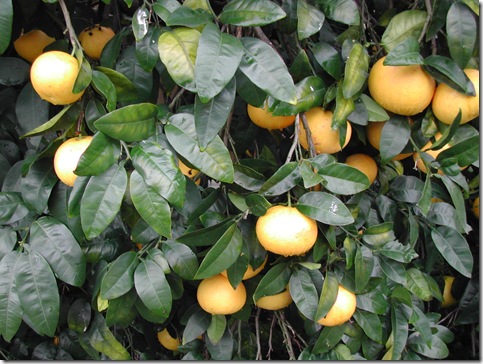
Washinton Navel eating oranges bearing in mid-winter on the Adelaide Plains in South Australia

Grapefruit on the world's most reliable tree; it bears abundant fruit year after year with almost no inputs.

Plenty of green things are doing well – broccoli, silver beet, beetroot, fennel, nettles, peas and potatoes.

Silverbeet for the chooks, and brocolli for the humans...

Garlic, leeks and onions are also underway; their biggest competition in this rich black soil comes from self-seeding nettles which will swamp them unless hoed out.

Young garlic, leek and onion seedlings getting underway in the winter garden. These will not be ready for harvest until mid-summer.

'Aquadulce' broad beans being grown for seedBroad beans are one of the few seeds that germinate readily under these cold conditions; these ‘Aquadulce’ broad beans are part of my rare seed collection being grown on for seed rather than food.

Down in the asparagus beds, the ferns have died off and will soon be cut back with hedge shears to allow the asparagus spears room to poke through in spring. Once trimmed off, compost made over several years in a Gedye Bin from household scraps will be added to the bed to keep the fertility up.

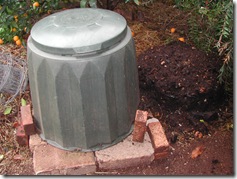
Asparagus bed in mid-winter before the ferns are cut back to ground level A Gedye Bin (left) produces rich fertile soil (right) from household scraps. The bin sits upon a brick base that prevents mice from tunneling up inside it looking for a free feed and a warm home.

Steamed Radish Cake

Wow! I did it! I made Steamed Radish Cake. :) I used Kebun Malay-Kadazan girl's recipe. Thank you!

I peeled and chopped some of the daikon radishes that I received from M-K Girl and Andrew.Bung them in the food processor and process until you have some slushy mush or mushy slush.
Mix with the other ingredients.
Cook, then put into a heatproof dish to steam until done. I don't have a steamer, hence this weird contraption. I had to steam it a lot longer, due to that, too.This is the end result.We had it stir-fried (also known as 'carrot cake' in Singapore. It's not a cake and does not have any carrots in it.) But this is another story. :)

Grapefruit curd

You may have noticed the pile of grapefruit in one of the pictures in the previous post. I took a few home to try and make grapefruit curd. A fellow seedsaver mentioned she'd made it years ago (thanks, Chook!), and I decided to give it a go. Couldn't imagine it not being nice.

I used this recipe for lemon curd (but I halved the quantities in the recipe), which works extremely well. It also appeals heaps, because it uses whole eggs. I modified the recipe slightly, instead of sugar I used honey.

Zest and juice your grapefruit. I used two biggish ones. You could use more, if you want a big hit of grapefruit.4 eggs - lightly beaten
100g unsalted butter
100g honey

Put all ingredients in a heatproof bowl.
Stir until it thickens, then pour into clean, sterilised jars.It's really nice, and even if you are not a big fan of grapefruit, you might like it. It doesn't taste too grapefruity. Just has a nice tang.

Curd does freeze beautifully. I just bung the jars into the freezer, and Bob's your uncle. Lemon or grapefruit curd, whenever you feel like it.