Showing posts with label Tales of a Backyard Farmer. Show all posts

Tales of a Backyard Farmer: Chapter 24

The Bridge  to Hagsfeld

Mid-2012: The final chapter of the book Tales of a Backyard Farmer

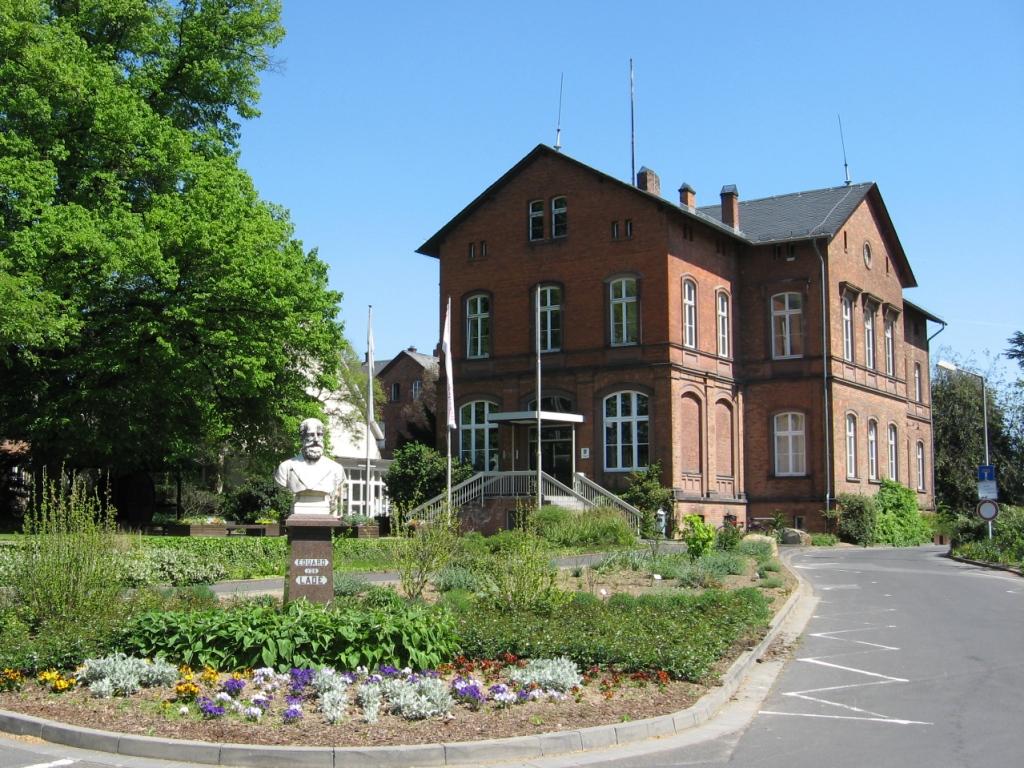
File:Verwaltungsgebäude FBG.JPGA sea of faces looked down at me expectantly from the lofty heights of the lecture theatre; scientists and academics from all over the world had gathered in Geisenheim in Germany to hear about the latest research into the irrigation of horticultural crops, and it was my turn to speak. Twenty-three years of solitary effort were about to see the light of day, and if I was going to make this stick, I’d better use what I’d learnt long ago - that what folk really love best is a good story. So I’d be keeping the graphs and charts to a minimum, and calling upon my Irish ancestry to help spin this yarn about a new instrument never seen before…

P1010229“In about 1985 or 1986” (I began), “a long skinny German student flew down to Australia to undertake his PhD studies into the water relations within citrus crops. And because he knew everything about plant physiology and nothing about electronics, pretty soon he found his way to my lab and we set out to measure the growth rate of oranges up in his test patch in Loxton in the South Australian Riverland. Three years passed quickly, and we shook hands for the last time as he prepared to fly back to the Fatherland with his newly-minted PhD.”

“But wait up there, Peter” (I said), “how are we going to measure the water relations in all those other crops that don’t have oranges hanging off them?”

P1010273“Andrew” (he said), “I’m going to back to Germany to become the famous Professor of Pomology in Geisenheim and to run the International Symposia on Irrigated Horticultural Crops in 2012. You’re the measurement guy – you figure it out!”

And so began for me a pilgrimage to build an instrument that would change the way the world’s farmers set about irrigating their crops. This ‘crop water stress’ sensor was to be inserted into living plants and (if it worked) would replace all the expensive soil moisture and climate tools that farmers had been using in the past to decide when to irrigate.

I’d be “getting the plants do the talking”.

P1010293My notebooks recorded the first crude circuits in May 1989 and dozens of notebooks followed, filled with ideas worked out in cafes, trains, planes and at the kitchen table by a man plodding through life under the combined stresses that a part-time doctorate added to the already volatile mix of running an engineering business full-time, community service, home renovations, a large vegetable garden, a growing family, ageing parents and my wife’s own studies and small business start-up.

P1000481That I succeeded in all this says much for the atavistic urge within me to grow things, dating back - no doubt - to my mother’s Irish ancestors. They had settled in Mintaro in South Australia in 1849 to grow wheat and barley, eschewing the crofter’s diet of potatoes that had failed them during the Irish potato famine, forcing them to flee their homeland. Had I myself been born into a landholding family, farming and irrigating horticultural crops would have been my life’s work. Instead, I was born into a landless city-based family with an inherited gift for engineering. The nearest I could come to farming was in the vegetable garden down the backyard. The nearest I could come to farmers was to be the guy who built their measurement tools.

P1000746And so here I was in the lecture theatre in Germany in mid-2012, with the conference convenor – my old mate (and now Professor) from those early years in Adelaide – sitting in the front row and wondering what an engineer could possibly tell a distinguished bunch of crop scientists about plants and how to irrigate them. What they didn’t know was that I’d been growing vegetables on and off since I was four years old, in every country I’d landed in except Papua-New Guinea, and that being out in left-field is just where you want to be coming from if you’re going to kick old conventions in the pants.

P1000461The lecture ended, and I was clapped on the back and invited to Israel, Spain, Belgium, Holland, USA, Italy, New Zealand and back to Germany to take part in scientific trials that would qualify this new sensor for different crops and different agricultural regions. There was excitement in the air – something new had turned up out of the blue, and not just for scientists, but designed for growers on the land. A triumph, really, but I could feel nothing but exhaustion after 23 years of sustained effort and a longing to be by myself - home again in my garden. But it was not to be – the demands of business and family washed over me and, as one does, I was swept along in playing my part.

P1000227And so, almost two months later, I found myself yet again on the bridge to Hagsfeld. Nowhere really, just a small pedestrian bridge over the main railway line near my German base in Baden-Württemberg; this line runs up from Basel in Switzerland all the way to Hamburg in northern Germany and the Baltic Sea. Cut adrift from my garden in far-off Australia and struggling to find a place to be alone in crowded Europe, this train-watching activity satisfied for me a different atavistic urge; the need to understand ‘how things work’ that I seem to have inherited from my father’s English ancestors.

P1000218This four-month stint in Germany has had all to do with the cook and her family as she nursed her mother on her death bed; we attended the funeral and then stood by as her father found his feet in his new role as a widower. If I’d thought life in Australia was hard, running an engineering business remotely from half a world away doubled the stress, and I found myself unable to shrug it off or escape it by any activity or diversion. I needed to go home.

Finally, duty done, we boarded the Qantas flight for Australia and I found myself wakeful in the early hours of a Saturday morning amidst sleeping passengers in a darkened cabin. The in-flight map in front of me showed us entering South Australian airspace over the vast unpopulated deserts that stretch for thousands of kilometres in all directions up behind Adelaide. Somehow, all the stress lifted off me, and the garden and our Australian life lay ahead.

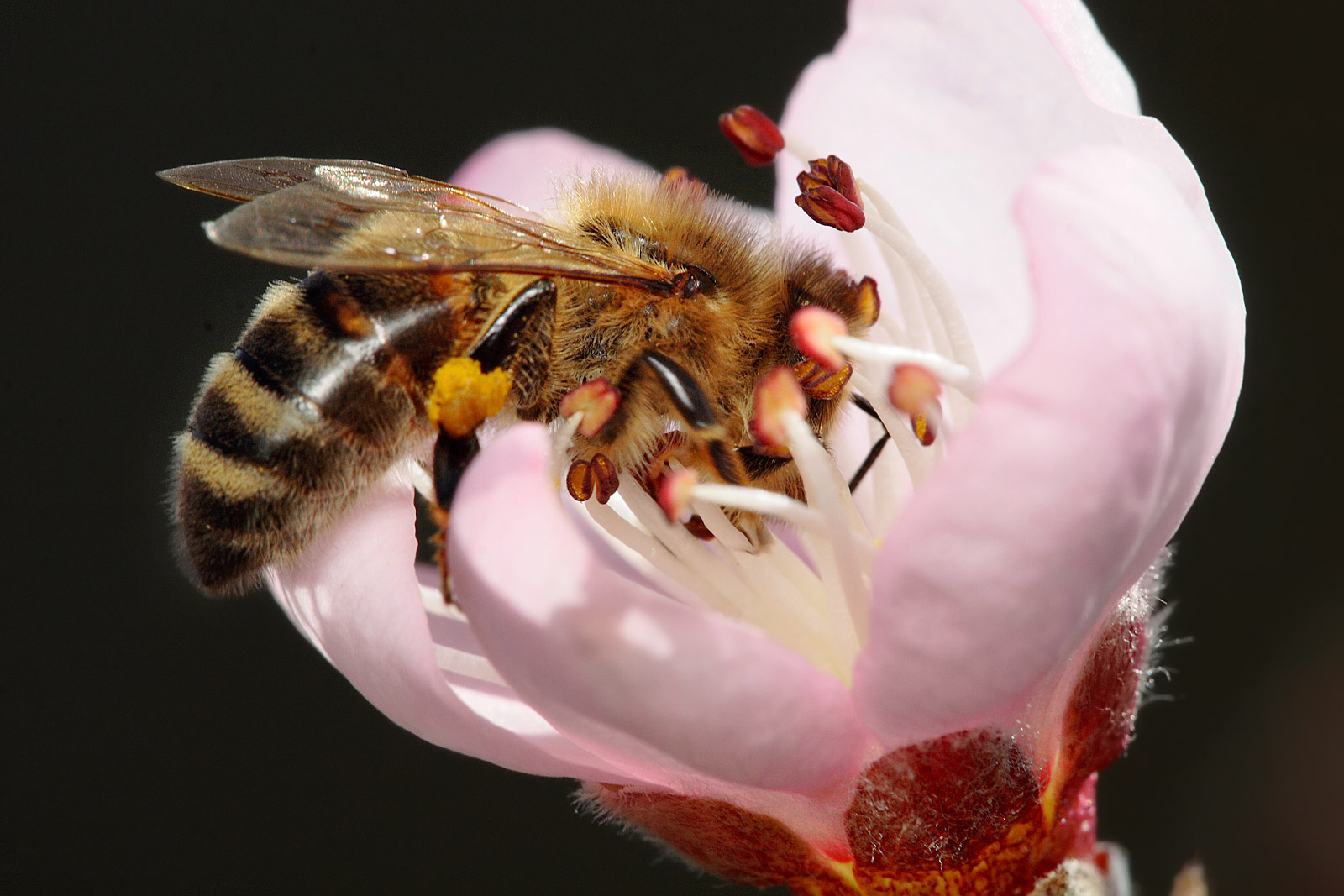
File:Bee pollinating peach flower.jpgOur three grown-up sons had gathered to greet us and to spend the weekend with us, the spring sunshine lit up the garden and its flowering peach and citrus trees, and we could get back to work in earnest. No matter that there was a mountain of stuff to do – this was where we belonged, down the bottom of the world far from our roots in England, Ireland and Germany. We’d been transplanted…

Tales of a Backyard Farmer: Chapter 23

Old folks in the veggie patch

Circa 2007: from the book Tales of a Backyard Farmer

It was the Christmas of 1981, and in the depths of a Canadian winter I caught the train from my home in Ottawa to the Montreal Airport to board the flight to Germany. A deep sense of sadness pervaded all that lay behind me, and only uncertainty lay ahead as I touched down in Europe for the first time. Long-distance courtship was having a rough ride, and I had only three weeks of annual leave to sort things out before my return to Canada to complete my contract.

clip_image002

It was a great pity that I’d spent so much time trying to invent new ways of sampling mineral slurries, and so little time poring over my German textbooks. I was still operating on a six-word vocabulary derived largely from childhood war comics, and “Dumbkopf” and “Schweinhund” didn’t quite fit the bill as opening remarks in my upcoming introduction to my future in-laws. Nor did it help that my only source of English-to-German translation wasn’t talking to me, apart from the occasional clipped sentences delivered in an icy tone that made Canada seem warm by comparison. But help was at hand from an unexpected quarter…

clip_image004

“It’s a liddle varm, ja?” startled me out of my concentration on the soup in front of me. High tea was in progress that Christmas Eve, following stilted introductions, and you could have cut the air with a knife. Well, what I’d just heard was definitely in the English language, it probably was a little warm back home in Christmassy Australia, but outside the brass monkeys were keeling over by the dozen. But Sepp - Claudia’s father - was beaming at me over his soup-spoon, not knowing that it would take me over twenty years to figure out that he was on about the soup and not about the weather.

clip_image006

The war-torn Germany of Sepp’s youth was not a place were village schooling included studies of languages other than German. But the seventeen-year-old lad was soon enough conscripted off the farm to bolster the ranks of a nation contracting in defeat and defended only by old men and boys. Only days before his capture by Allied troops in Holland, Sepp was ordered to search local farmhouses and to bring back any animals he could find to feed the hungry German soldiers. The one horse he found belonged to an old farmer who would face severe hardship without it. To the German farm boy – no stranger himself to the difficulties of eking out a living from a smallholding – the farmer’s pleas touched a chord, and he reported back to his superiors that no livestock remained in the surrounding countryside.

clip_image008

Weeks later he found himself interned on a farm in Scotland, where he was to remain for three more years before his repatriation to southern Germany in 1947. Along the way, words and phrases in broad Scottish seeped into his life, and were to reappear unexpectedly decades later when his elder daughter turned up at his meal table with a stumbling Australian in tow. Nor was that small store of English vocabulary destined to rust any further – more years passed, and a small tribe of tousle-haired Aussie boys came to love their Opa and his odd mixture of German-English phrases.

clip_image010

Only a year after my wife’s uncle had fought Australian troops in Tobruk in North Africa with Rommel’s Afrika Korps, the ‘Desert Rats’ were called home to defend Australia in the Pacific War against the Japanese. Now my own favourite uncle was moved up with the Australian infantry forces to the New Guinea highlands. Reg Dempsey also returned from that war to marry and raise a family of six children, while pursuing his passion for gardening and poultry-raising half a world away from Sepp’s first garden in Karlsruhe Germany.

clip_image012

It was Reg who turned up one dark night at my rented house in Magill, and lifted six sleeping chooks out of cardboard cartons and placed them on the perches of the old chicken coop down the back of my first real garden. Years later, when he had moved back to Adelaide and I had a family and a garden I actually owned, we came to be friends. I’d take him potted tomatoes and do the heavy digging for him, and he’d send me home to my wife proudly bearing magnificent displays of potted petunias. Friendship grew between us in quiet ways, through our common love of growing plants and family history, bakeries and a good joke.

clip_image014

Near the end of his own life, he told me the story of a Japanese attack that had wiped out his mates in the other half of his Signals Platoon. They came under artillery attack on the opposite face of a mountain, while he looked on helplessly. I was fortunate indeed to have had these few years with this wonderful old gentleman. On the other side of the world, Sepp’s older brother had failed altogether to return from the Russian front, and we were never to know him or the family that he could have raised.

Tales of a Backyard Farmer: Chapter 22

Memories of a Veggie Patch

August 2007: from the book Tales of a Backyard Farmer

There’s no end to the dumb things you can do in a veggie patch.

Last summer the butternut pumpkins wove their way through all the crops in their vicinity – corn, tomatoes, leeks, tomatoes, silver beet, beans. With leaves the size of dinner plates, they catch the sun and store it in the pumpkins that form in ones and twos on each of the vine stems they push out. All these golden wonders are revealed in autumn when the greenery dies off, leaving the fruit to be picked and stored until the following year.

clip_image002

One of these days I’m going to turn the clock back a century or so, and build a cellar under this house to store the proceeds of the garden for the lean months. In the meantime though, I’d put a couple of barrowfuls of those pumpkins under the bench in my workshop, then shot through on holidays, leaving them to their fate. Their ‘fate’ got in under the eaves of the shed via the lemon tree, walked along the rafters, built comfortable nests in the insulation, and dined off the pumpkins. Rats! Now I’ve got to choose between the chemical approach (rat poison) or the organic approach (bashing them with a stick) to get rid of them…

clip_image004

It’s August again, and another year has passed in the veggie patch. Now and then the sun comes out, and I’m reminded of the simple blessings rain and sunshine bestow on me in my garden and at my table. Only occasionally now does my mind stray to that far-off garden in Canada, which in the space of one short growing season bought me so much pain and the lessons of manhood.

clip_image006

Like vegetables, we humans are genetically programmed to grow to adulthood in a fixed span of months and years. Yet in our modern lives, we no longer have the ceremonies and trials-by-ordeal that separate childhood from adulthood in tribal communities. For modern males especially, that transition is now a matter of fate, leaving open the possibility that the body will reach maturity while the emotions, social skills and spiritual life remain in childhood.

clip_image008

Somehow, through all the years of my own adolescence and young adulthood, it remained clearly in my mind that I couldn’t settle down to adult responsibilities until I’d been off to see the world. While hitchhiking through Canada, I’d been offered a job by a small company on the outskirts of Ottawa. After a further six months knocking about the world, I flew back into a Canadian winter to take up my new post and to replenish my dwindling cash reserves and professional credibility.

clip_image010

When spring finally came, I talked my landlord into letting me use the garden down the backyard to plant out my veggie patch. By then the loneliness of the winter months was behind me, and I had made some Canadians friends. After twenty years of studying and learning my trade, I was determined to test the theory that a bachelor was someone who came to work from a different direction every morning. But I was dumb enough or arrogant enough or just plain immature enough to play the field within the friendships I had formed, and it was in the veggie garden that I came a cropper.

Perhaps it’s a testimony to the pain that followed that I can no longer recall what I’d planted in that garden. My two favourite girls were best friends. I’d met them together at a ‘speakeasy’ where the music was good and the tables in short supply – they asked to join me as I ate my meal. One spring day my favourite girl and I were planting out seedlings when her friend rang, then came around to change places.

clip_image012

Where I should have made a choice and a stand and a decision, I let events take their course, and threw away the trust and affection of a fine young woman in the process. She didn’t deserve to have me happen to her, and I just plain didn’t deserve her. By the time summer moved into autumn and I’d begun to harvest that long-ago garden, I was again - and deservedly - alone.

clip_image014

Things only got worse after that. The company’s directors fired the manager, and it was left to me to pull the small staff back together, to hire and fire, and to get through every engineer’s nightmare – new design work on top of a production schedule. With no social life or social support system, and with nowhere to fall back to, I became a permanent fixture sleeping on the last bus going back home from work, seven nights a week.

clip_image016

All young men should have the right to one mistake, but not the right to repeat it. Perhaps no young man truly grows up until he’s been humbled by a woman he really cares for. If that was the bachelor life, it wasn’t for me – I was a one-woman man. The following spring I left Canada for Germany determined to ensure that the woman who was for me had all of me.

clip_image018

And that’s the way it’s been. The battering I took in Canada stayed with me far into the first years of my marriage. It was a decade before I could bring myself to return to the veggie patch and yet more years before I could take over the garden completely.

But a garden is a place of healing and forgiveness. I can’t change the past, and I no longer want to – its lessons have stood me in good stead. Now my own three sons are among a whole new generation of young men eagerly preparing to go out and seek their fortune in the world. Perhaps somehow they’ll carry an image of an old bloke in a veggie patch, who stood by his wife and family through thick and thin. And when that critical moment of choice arrives for them, maybe they’ll know how to behave decently.

Tales of a Backyard Farmer: Chapter 21

Heat over the Veggie patch

January 2007: from the book Tales of a Backyard Farmer


clip_image002“The door to the furnace of Africa is open” – so goes the old Italian saying when the temperatures climb into the mid-thirties. In the past few weeks, as temperatures soared to the low forties over my Australian veggie patch, the only thing moving in the garden by late morning is the gardener himself, and by then he’s slowing down too. Even the chooks have gone to ground in the shade under the lemon tree, scraping out shallow bowls in the moist earth which I have watered especially for them, and where they ‘hole up’ to keep cool during the middle of the day. Egg production has been dropping lately, and in the face of protest from my soft-hearted spouse, I’m muttering darkly about chicken soup and new hens.

clip_image004

No matter what the weather brings, garden I must. It’s early January, and I’m still trying to sort out the remnant chaos from the past year as I plant out chillies, pumpkins, sweet potatoes, luffa gourds, snake beans and Italian lettuces that should have been in the ground back in spring. This year I have abandoned bush beans, and have concentrated on climbing varieties, which produce heavier crops for longer and don’t force me to kneel down to pick them. Kneeling down is easy – it’s getting back up that is becoming increasingly creaky. So Lazy Wife and Purple-King beans climb my bamboo frames down the row from Giant-of-Stuttgart and Epicure beans. When the errant growing tips of these beans wander off-target and across my path, it’s my job to loop them around the nearest bamboo post and suggest that upwards might be more productive than sideways. The beauty of the big seeds from beans, corn, zucchini and cucumbers is that one can plant them in soil completely protected from the harsh mid-summer sun by a thick layer of pea-straw, and they’ll poke their way through when they are good and ready.

clip_image006So through my Christmas and New Year holidays I’ve been getting filthy, sweaty and tired, and loving it. Moving fence lines, mulching, shredding, sawing and stacking wood heaps is hot hard physical work, but at least my brain is resting, and new ideas spring forth of their own accord from my subconscious, which has been working on problems fed to it over the past year. Every half-hour it seems, I head up to the house for another glass of water, a handful of sultanas and almonds to fuel this lumbering old body, and to make a few quick sketches in my notebooks that record ideas for sensors and instruments that have popped into my head ready-formed. It’s the gardener in me telling the engineer about simpler and more accessible ways to monitor soil moisture and soil salinity, wetting fronts and deep drainage.

clip_image008Sometimes even I can be embarrassed by the shear quantity of fuel that I burn to get through this hard physical work. The cook’s fed-up too with my predations on the almond bin, and the sight of me standing cow-eyed at the back door hoping that lunch has magically appeared on the kitchen table. If the disapproving looks get too uncomfortable, I take to browsing in the garden on beans, plums and oranges to supplement my diet. Weeks pass, and order slowly emerges from chaos, despite all the many detours I have to track through in order to clear the way to the main job in hand.

clip_image010There’s something about chaos that presses uncomfortably on one’s life, and a threshold above which no decent gardener can sleep comfortably at night. Little problems niggle but remain unresolved, such as those blasted Indian Turtle-Doves that raid the chook-food in the automatic feeders. I’m starting to suspect them as a source of disease in the flock, and try various methods to keep them away. Unbidden, my mind wanders back to boyhood creations of sling-shots, box traps and air rifles.

clip_image012At last even the lawn is mown, and it’s time for Wally the scarecrow. For an inveterate recycler like me, throwing stuff out is both an admission of defeat and a failure of the imagination. So Wally takes shape from old Blundestone gardening boots below acid-burnt overalls stuffed with straw around a wooden skeleton hammered together. All this supports an aluminium billy-can head, over which I fit a grotesque latex mask that I bought for a Halloween party during my time in Canada. Back then, wearing this and those lap-laps from my time on Bougainville Island, and carrying a club I’d fashioned in the workshop, I must have looked like a real ‘Wantok’ from Papua-New-Guinea, because I don’t recall the evening being a social success. I fit Wally out with old cap and gardening gloves then stand him up against the barrow to introduce him to the cook. My sons are in fits – they much prefer the model of Wally from the construction phase, when he was lying under the wheel of the barrow as though it were me that had been run over. No point freaking her out though – she’s already teary because one of the chooks seems to be on death row. I’m going to have to outlive her, or she’ll be a train-wreck after my passing…
clip_image014Finally a very scary-looking Wally is completed and lashed to some wind-powered bamboos growing in the chicken yard. For good measure, I hang old CDs on threads so that the movement and flashes of reflected light add some chaos to the lives of those pigeons. Even the cook is happy, because tomorrow is Sunday, and I am sticking to my New Year’s resolution to give the poor girl a day off once in every seven. Breakfast of fresh squeezed orange juice, coffee, herb omelette and fresh fruit is prepared with love by the gardener. Later in the day there will be a roast or chops barbequed from that lamb I received as in-kind payment for some agistment I’d agreed upon with a farmer-mate up in the bush. Sage and onions get mixed into the mashed potatoes, and bowls of garden salad, roast pumpkin and sweet potatoes make up the side dishes. Perhaps there will even be a glass of beer to wash it all down with. While it’s not altogether a day off for the gardener, there is happiness in the air as the cook finally has a chance to put her feet up. I too have some time to write up my ideas, and to be inside the house, out of the heat and with guilt-free access to that barrel of almonds.

Tales of a Backyard Farmer: Chapter 20

Professors in the Veggie Patch

September 2005: from the book Tales of a Backyard Farmer

(See glossary below for the meaning of unusual words and acronyms in this story)

I’m out cold again, fast asleep and slumped against the wall during yet another lecture on I-didn’t-catch-what. The IFOAM conference is in full swing, and I’m more bleary-eyed than your average jet-lagged delegate, a victim of the Dark Forces of Chaos.
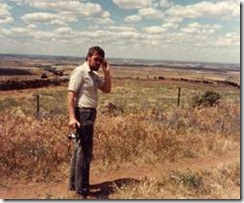
clip_image002This lecture turns out to be on weeds and cover-crops in organic farming, and I stagger to my feet with the herd as the afternoon tea rush begins. But what is it about this particular lecturer that strikes a chord? Ah yes, hair greyer, body thicker (much like mine), but still discernibly the young German post-graduate scholar whose photo appeared only recently in the SASA 30th Birthday lecture series I’d put together. Back then he’d been a last-minute stand-in for Professor Hardy Vogtmann, who’d been booked in the mid-eighties to fly down-under as a guest of various Australian organic growers, but just couldn’t make it when the time came.

Hoping (the now Professor) Peter von Fragstein hadn’t spotted the fact that I’d slept through most of his charts and tables, I wander up to the front of the seminar room to welcome him back to Australia. He is delighted to be remembered, and when I wonder out loud if he’d care to skip one or two of the 360 lectures on offer to take a tour of an Aussie backyard veggie patch, he jumps at the chance.

clip_image004Somewhere in the depths of my being and in the midst of this conference, I am trying to reach a decision. With advancing age and a failing short-term memory, I am doing what older humans have been best at over the course of millennia; piecing together the patterns of a lifetime and melding these into some sort of homespun wisdom. The hallmark of this process for me comes close to what Winston Churchill called ‘black dog’; a slumping of the spirit that sees one foot put before another only by a supreme effort of will.

Out in the corridors of the Adelaide Convention centre, I run into an old acquaintance from my engineering life, this time an Australian academic in the field of conventional agricultural. I am still at the totally confused stage about this conference, so I ask him what he thinks of it all, and a delighted grin lights up his face. “Ah”, he says, “it’s the last vestiges of the failed Trotskyite revolution; it’s wonderful!” That’s just what I need - a ray of humour to take a hair of the black dog that bit me, and the very thing for me to take my bearings by…

clip_image006Something’s been niggling at me, and it keeps slipping into the corner of my eye and disappearing again when I try to get a good peek at it. Soon I start to see its shape – some of these largely Danish German and Dutch academics are putting up papers that seem to mimic conventional agriculture in just about every respect, except that they do not use chemical fertilisers. The contrast with papers from Venezuela, Sri Lanka and Ghana are stark; first and third world systems are just not interchangeable, and the problem is energy.

“Zum beispiel” - as my new mate the German professor would say - is the case of the missing tractors. In Denmark, they all seem to be painted a bright blue, according to the slides presented. Behind one that I recall vividly was a giant tank of fuel oil, which was being consumed at the rate of 300 litres per hectare to heat water to boiling point. This agricultural engineer then drove along ‘steaming’ a thin strip of soil to kill off soil-borne pathogens – a problem normally solved by organic farmers through crop rotations. This done, he planted a thin row of lettuces into what can only be described as ‘dirt’. My own concept of organic agriculture as ‘growing things in living soil’ is nowhere in evidence. This dirt has been thrashed to pieces by tillage to control weeds, then steamed to eradicate the remaining worms, fungi, bacteria and other micro-flora and -fauna found in a healthy soil. Haven’t these Europeans heard that we’re sliding down the back slope of cheaply-available energy, and that one of the central tenants of organic agriculture is energy conservation?

clip_image008By contrast, straight after another lecture on soil bashing and steaming by a Dutchman stuffing up crop rotations under 65 hectares of glass-houses, comes a delightful lecture by a young bloke from deepest Africa, where such luxuries as tractors don’t exist. He’d been growing cowpeas in amongst sorghum. To keep the African weaver birds away, he’d strung the innards of some cassette tapes in glistening lines all over the field, and had a bunch of little boys leaping about and waving their arms whenever a flock would appear. The women had hand-planted and hand-hoed his experimental crop in a festive mood of cooperation at local village level.

Back in my own village of Adelaide, in the Soil Association of South Australia (SASA) where I’m editor, seed sales officer, stop-gap lecturer and membership secretary all rolled into one, I’m starting to feel like the odd man out within a bunch of folk who are contrarians anyway. Politics has intruded, and I’m all adrift, plodding along on feet of clay surrounded by folk abuzz with the giddy notion of our small group becoming something called a ‘peak body’ for organics in South Australia. I’ve got no argument with peak bodies, but politics and practical matters make strange bedfellows. Not for me the ‘top-down’ approach of lobbying Governments – my method of winning folk to organic agriculture always happens one packet of seeds at a time.

So sleep eludes me in the dark of the conference nights, and I’m to be found in the wee hours down my back shed packing seeds for the big Go Organic Festival, coming up on the weekend following the conference. Finally I am forced to admit to myself that a backyard veggie grower is by definition a ‘bottom-up’ exponent for change, and that this disparity with my fellows is the reason that my peace of mind has taken such a battering this past year. It will soon be time for others to push the organic barrow, and for me to return quietly to the garden and that doctoral thesis that I’ve almost completed.

clip_image002[7]

With this decision made, I realise what has been patently missing from this international organic agricultural conference - backyard veggie patches. The German professor has probably picked up a whiff of this too, as has his mate the Hungarian professor, who has also invited himself along on my impromptu tour, along with another old geezer who’d tried organic farming in broad-acre crops many decades before.

Given all the turmoil of this past winter, my veggie patch is looking decidedly ragged this springtime. But there we all are two days later, having a grand old time stirring my nettle tea, looking over my wild-sown lettuce and smelling the scent of the citrus blossoms wafting off the orange, grapefruit, lemon and mandarin trees in the quiet afternoon sunshine. Afterwards we drink coffee and eat homemade cake up at the house. From my kitchen table we can survey the vegetable garden only metres away, from whence comes all the nutrition that my family needs, grown on good living organic soil. Even my hoe is in semi-retirement as the chooks (the Hungarian name for ‘hens’ apparently) do what digging needs to be done while I’m off at conferences. The yard is too small to capture our food energy needs through grain growing, but much of the rest of our food has almost no ‘food miles’ attached.

The conference ends, and I’m no wiser about how to solve the world’s food problems. But then the two-day organic fair begins, and Adelaidians crowd into the SASA tent hungry for knowledge and my organic seeds, herbs and potted heritage tomatoes. No time now for slumping and sleeping against walls, and no matter that I’m clueless on the grander vision of where organic agriculture should be going. The answers to everything are all inside my head and ready to hand; the product of hundreds of quiet and contented hours in a veggie patch down-under.

Glossary:

IFOAM: International Federation of Organic Agriculture Movements

SASA: Soil Association of South Australia

Contrarian: Someone going in the opposite direction to the common herd

Zum beispiel: (German for) “For example”

Food miles: The number of miles food produce travels from ‘plough to plate’; that is, from the place of production to the point of consumption.
Tales of a Backyard Farmer: Chapter 19

Changing times in the veggie patch

Circa 2006: from the book Tales of a Backyard Farmer

clip_image020

Mother’s Day in mid-May dawned fair and calm with a touch of cloud over the sea but clear blue skies over the hills up behind the veggie patch. My sons and I refer to my wife (their mother) as “Wonder Woman” – we wonder what she’s doing with all us blokes. It can’t be easy being the only female in the home, hens aside. Our three sons range in age from the mid-teens to the early twenties, and so they are either still asleep or off some place. So it’s just the two of us, and I put aside the calls of the veggie patch and we head for the Stirling Organic Café for Mother’s Day breakfast in the sun.

clip_image002

And how about that? One can have ‘organic milk’ now in one’s coffee and a whole meal whose ingredients are completely organic. Times are indeed changing – when we arrived back in Australia from Europe in the early eighties, I doubt we’d seen the word organic in print anywhere, and cafés selling a decent cup of coffee were as rare as chemical fertilizers in my garden shed.The years since then have been a real struggle, but sometimes now we get a glimpse of a future that makes some sense and seems possible to achieve. After our breakfast we walk through the Stirling Linear Park, through Australian eucalypts planted by the Stirling Community, and offering an almost European vista of hills trees and meadows beyond. Quiet reigns, and the smell of the autumn woodlands is wonderful.

clip_image004Now and then we have young folk from Germany come out to see Australia, and camp with us until they get their bearings and launch off on the trail up through Ayers Rock and the Northern Territory, across to Cairns in Queensland, down the east coast and back around again. We used to bring them up here to show them the beauty of the autumn leaves, until we realised they’d seen all that at home and wanted to see “gum trees” and deserts. Now we show them nothing. Well, it looks like ‘nothing’ to them, and that’s fascinating – the wide-open vista looking out over the Murray Valley from Cookes Hill on the other side of the Mount Lofty ranges. Then along the foothills to Pine Hut Knob, where we light the camp fire and barbecue some sausages for them while the corellas and cockatoos screech and wheel around the River Red Gums, with not another human in sight.

clip_image006A fellow turned up the other day from the local paper to interview me for an article he was writing on ‘Silent Achievers’. Turns out I’m regarded as a pioneer in the wind energy business in Australia, and the story that started here on the windy slopes of Pine Hut Knob thirty years ago is now newsworthy. Every dog has his day I suppose, but the story that began for us in a lonely farm house along the valley out there never had a rainbow of fame and fortune painted into its purpose – I was looking for a way to survive. I’d just returned to Australia in 1983, from engineering positions in the mining industry in Papua-New Guinea and Canada, and I was determined to build a career in environmental measurements. With a $9000 grant from the State Energy Research Advisory Committee and a new wife and a young son to support, I spent three years tracking down and instrumenting South Australia’s windiest places to investigate their potential for ‘wind energy mining’.

clip_image010

Using the primitive computers and data loggers of the day, myself and a small group of folk within the Department of Mines and Energy, ETSA and the Bureau of Meteorology identified the likeliest sites for potential wind farms. These sites were deemed capable of injecting significant amounts of sustainable electrical energy into the South Australian power grid.

clip_image008Despite the successful completion of that SA Wind Energy Survey, little more became of the report for over a decade, except for the installation of a 300kW demonstration wind turbine at Coober Pedy, and some smaller wind surveys on Kangaroo Island. However, the Mandatory Renewable Energy Target (MRET) introduced into the Australian power industry in the late nineties saw a massive revival of interest in potential wind energy sites in windy South Australia. The early-eighties data set - gathered without fanfare so long ago - was suddenly hot property! Key SA wind sites identified in 1987 were re-instrumented with far more sophisticated equipment and on much higher towers, and the wind potential verified. In the past five years, wind farms have sprung up on the most promising of those long-ago sites, at Starfish Hill and Lake Bonney.

clip_image014

I no longer wear the beard and battered bush hat I did over a decade ago, the “fat gene” has kicked in, and I no longer have to run around in the shower to get wet, even if I could. I spend my hours down in a veggie patch rather than up on wind-swept hillsides, yet I’m still mulling over every pioneer’s central question: “where to from here?”

clip_image012

Most folk are happier with old problems than new solutions. The Howard Government is about to tip half a billion dollars into geo-sequestration (burying CO2 from coal fired power stations underground) while pulling support out from under clean wind energy sources in Australia. Well, that bloke’s the worm in the Australian apple, and so it’s no surprise to me to see him trying to push an old barrow further rather than build a new one. And last week I took a bus into the city to hear a talk on the sustainability of the Chowilla Flood Plain up on the Murray River near Renmark, which is dying from salt in its dried up arteries. A small group within the Government had to move bureaucratic mountains to make even a small splinter of difference to the fate of our city’s major water supply.

clip_image018So what chance now, twenty or more years on, of making a difference, when governments cannot or will not? I no longer want to crawl in among the basil bushes and weep – I’ve come up with a devious plan! This plan is only for me, but I don’t reckon I can change the world anymore, just a few things in my corner of it. So I’ve decided three things; that I will edit an organic magazine (The Living Soil), that I will raise and save rare vegetable seeds, and that I will be Adelaide’s first Backyard Farmer. My paddocks will be in the backyards of others, and fresh food will be closer to our doorsteps. Sometimes I’ll have share-farmers, but supply them with seed and advice. We’ll fertilise with organic compost made from plant matter harvested from the ‘green’ collections down here on the plains, from lawns and street tree trimming. We’ll be kindred spirits and a community again – folk swapping fruit and vegetables, seeds and cuttings, homemade jams and preserves, pickles and chilli paste. We’ll join a food cooperative, buy bulk and redistribute organic rice and flour from back door shops around the neighbourhood. And we’ll…

clip_image016

OK, I’m a dreamer, but the shop is open at our back door and I’ve joined the Seed Savers Network. I’m eyeing off the plot of land behind the house of my old Italian neighbour over the road – he’s too old now to farm it, and I reckon it’s perfect for all the melons and pumpkins that need little care but take up so much space in my own veggie patch. I’ll supply him with tomatoes in return for the water he uses on the garden. Then there are all the front lawns around here – I wonder who’d prefer a herb garden alive with colour scents and bees, to grass and the chore of mowing?

Tales of a Backyard farmer: Chapter 18

The grasses of Europe

Circa 2004: from the book Tales of a Backyard Farmer

clip_image002[4]If a man wanted a quick squiz at the spring fields of Germany, this was certainly the way to be doing it! It was early on a Sunday morning and we were streaming quietly through the countryside at a mere 300km/h between Mannheim and Goettingen, en route by train from southern Germany to Denmark. But even at this speed, I had to admit to a creeping uncertainty about what it was that I was seeing. Where were all the birds?

For a man like me, who likes nothing better than home and hearth and quiet hours in the veggie patch, it was my alter-ego riding in this carriage. clip_image004[4]This is the bloke who can speak German, leap on and off trains and planes, and has an encyclopaedic knowledge of environmental measurements, all in his head. Yet in the quiet interludes between visiting companies up and down Europe, it’s the veggie gardener who peeps through and looks around at what it is that we’ve become.

These fields outside the train window are a uniform green, and it seemed, stretch right up into Denmark and west across Belgium and France and up through the length of England. clip_image006[4]Apart from a disparity in colour and size, this is just what I’d be seeing back home in Australia – the landscape cleared of all biodiversity to make way for single crops of value to mankind, but of little value to a great variety of birds and beasts, notable here by their absence. Crows and magpies, the occasional flock of jackdaws - these were the only sign of life over these fields, unless one was lucky enough to catch sight of a heron beside a low-lying wetland, or a cluster of rabbits or an introduced pheasant in one of these fields.

It’s been two years since I was last in Germany, but my old bicycle has waited faithfully in the shed for me.clip_image014 Computer and notebooks are stowed away for a few days between these various train journeys, and with no more than a quick dusting of the saddle, I’m abroad and off again to plunge once more through the German fields and forests. I can barely explain, even to myself, what it is I’m looking for out here. But I think I’m hoping to catch a glimpse of what it is we might become if we keep trying to turn even more of the planet’s biomass into humanity.

Still, if you had to cram four times the population of Australia into Victoria, the German model wouldn’t be a bad one to choose. Organised with tremendous precision, everything works, and runs on time, just like this train. Wherever one goes, rubbish bins for the public allow ready separation of glass from plastic from paper. All drinks are sold in recyclable glass, and ‘Bio’ stores are everywhere, selling organic produce. Everything is tidy and pleasant and well ordered. The German’s complain loudly enough about their falling living standards, but they are coming off a very high plateau, and it all looks pretty good to me…

clip_image008[4]South of Bremen, I hook up with a German-Australian bloke responsible for installing many of the wind turbines that stretch across a wide swathe of northern Germany and up into Denmark. In the middle of flat and picturesque farmland, we climb 114 metres up the tower of a 2MW-wind turbine, which they have stopped in honour of my visit. This is a marvellous treat for me; these fine pieces of engineering whisper quietly way above the fields, and generate clean electricity for tens of thousands of households over a twenty year lifetime. Below them, life and farming goes on as before. Over eighty-five percent of the German population favours a move from coal and nuclear energy to sustainable energy resources like wind power.

clip_image012Lunch on the spargel farm, however, was something else! Spargel (white asparagus) soup followed by spargel with cutlets and potatoes, and for dessert? Not spargel, thank God, but trifle and jelly (two serves – I was going to go back for thirds, but we had to get back on the road…) In these great sandy fields the asparagus mounds stretch as far as one can see. The soil itself has almost zero organic matter in it, though I never did get to roll around in it, which is the best test. Instead of organic matter, soluble nitrogen fertilisers are applied for weeks before it is harvested, under strict controls imposed by the European Community’s agricultural commission in Brussels. Asparagus Bundle - courtesy of Wikipedia From dawn to dusk the spargel cutters are out there for the six-week season in mid-Spring. Germans? No, these folk are professors and music teachers and motor mechanics from Poland, the Czech Republic and other eastern European countries who pour into Germany and live for the duration of the harvest in what in Australia would be called ‘shearer’s quarters’. They earn more in this brief period than in the rest of the year back home. All to feed the German appetite for this seasonal vegetable of doubtful nutritional value.

Some weeks later, all pheasanted out, I returned from England to southern Germany, still with a few days in hand but starting to long for the noisy chorus of Australian birds over the veggie patch. Yet it remained for the very young to show me what it was I would otherwise have missed – the grasses of Europe.

This was a business trip, but it afforded me the luxury of time to spend with my niece and nephew, aged four and nine respectively. I’m their only uncle, and with their father being an only child, and my wife their only Aunt, it will be ever thus. So I’ve been playing soccer, wheezing and puffing like a grampus, and hurtling up and down tiny forest paths with my nephew screaming excitedly from the bar of my bicycle.

clip_image010[4]But it’s my little niece who has a special place in my heart. Barely able to crawl when she arrived for the first time in Australia, she would nevertheless dash for the back door on all fours, and attempt to pull herself up to get outside to the veggie garden. I’d haul her aloft, and we’d wander out together to sample at first hand the quality of the peas and texture of the broccoli heads.

Years have passed, and now we wander hand-in-hand down the lane from Oma’s house to the field at the end. Some years back, the German government made what is to my mind a beautiful decision; they decided to let their footpaths and open spaces run to seed. Instead of pristine mowed lawns, now one sees scraggly grasses alive with bees and wasps and tiny butterflies. This was not about saving motor-mower fuel, but rather an attempt to let the micro flora and fauna of Germany blossom and bloom and flourish. It is here, on our hands and knees in the wet grass, that we spy the real biodiversity of the German landscape, all of which was invisible from the high-speed train.

clip_image016

Within half an hour, we have each picked a marvellous bouquet of feathery grasses, clovers, tiny blooms and exotic seed heads, mixed with delicate elongated leaves and clusters of tiny white flowers from the trees that overhang the pathways. There, in the posies picked for mother and mother-in-law, lies the real richness and beauty of the European landscape.