Almost the only native bush food grown and exported from Australia in significant quantities is the ‘macadamia nut’, a native of south-east Queensland. These highly nutritious nuts are particular delicious and addictive when coated with chocolate, so make a great gift from Aussie gardeners to overseas friends – just grab them at any airport as you rush to catch your flight!
Macadamia nuts are grown commercially on the rich red soils around Bundaberg in Queensland, where they are irrigated to maximise nut and oil production.


Just over the road from these macadamia trees, a few kilometres outside of Bundaberg, I discovered a field of commercial tomatoes (below) – a timely reminder to a kitchen gardener from Adelaide about the difference in scale that exists between backyard produce and commercial field or glass-house grown tomatoes. Indeed, most Australians eat these largely tasteless tomatoes for want of access to their own piece of soil…
Note the plastic evaporation and weed barrier through which these tomatoes are growing, below which drip lines provide the plants with both water and soluble nutrients in a process known as ‘fertigation’. The wires lying on the ground on either side of the row will be lifted up to support the tomatoes as they gain height.

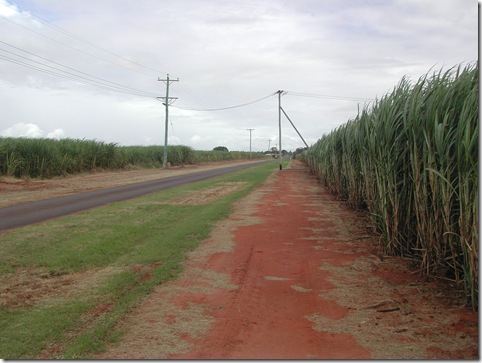
And of course, as one would expect in Bundaberg, home of Bundaberg Rum, Bundaberg Sarsaparilla and that absolutely wonderful Bundaberg Ginger Beer, there’s sugar cane growing in huge acreages. The Bundaberg Port is dedicated to the process of storing and shipping the half-million tonnes per year of raw sugar output of half-a-dozen local mills. There’s even a huge tank of molasses, presumably piped below the road to the waiting holds of incoming ships.
Small railway tracks all over the district move the cane to the mills.